
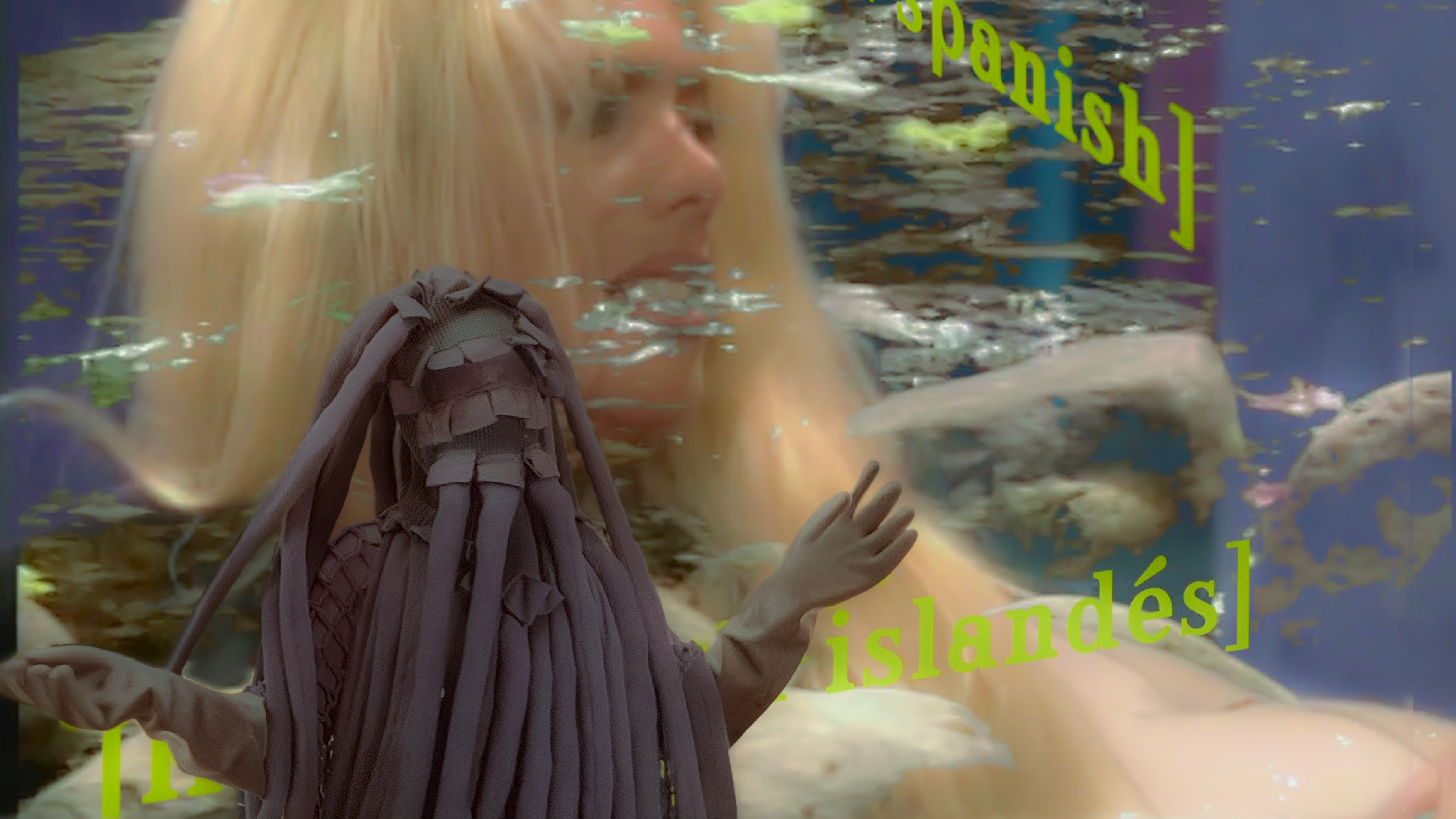
Work developed during Hugo Llanes’ NAARCA Residency at Cove Park in Summer 2025 forms part of his debut solo exhibition, Bonita, at Reykjavík Art Museum, now on view until 3 May 2026.
In this exhibition Llanes examines the intricate and often contradictory experience of cultural adaptation as an immigrant. Engaging with foundational elements of both Icelandic and Mexican/Latino culture: language, food, art history, and music, he investigates how cultural exchanges take shape, which parallels are in place and what it means to belong.

Hugo Llanes, Bonita, 2026 (photography, Vigfús Birgisson courtesy of Reykjavík Art Museum) 
Hugo Llanes, Bonita, 2026 (photography, Vigfús Birgisson courtesy of Reykjavík Art Museum) 
Hugo Llanes, Bonita, 2026 (photography, Vigfús Birgisson courtesy of Reykjavík Art Museum) 
Hugo Llanes, Bonita, 2026 (photography, Vigfús Birgisson courtesy of Reykjavík Art Museum)
Reflecting on the impact the NAARCA Residency had on his practice, Hugo says:
My arrival at Cove Park for the NAARCA Residency came with very specific ideas in mind. However, engaging deeply with the theme of cultural adaptation and the hybrids that emerge through cultural exchange required openness to change and evolution.
This process of negotiation between my initial thinking and my evolving practice became central to the development of the work, and this openness proved to be incredibly enriching. My debut solo exhibition, Bonita now showing at Reykjavík Art Museum reflects this dynamic transformation.
My time at Cove Park was pivotal during the early stages of the project. I was able to conduct multiple tests and sketches using organic materials, finalise the first render of the exhibition, and submit key applications for funding, including the Icelandic artist salary, which I was fortunate to receive. This is a highly competitive and important support system for artists in Iceland. As a result, my four week residency was divided between administrative responsibilities, studio practice, hangouts with the other residents and my beautiful bike rides to the nearest gym.
Being surrounded by sheep and reflecting on the significance of wool in Scotland, Iceland, and Mexico, led me to explore its cultural value and symbolism. Wool became a powerful connector, revealing how deeply embedded natural materials can carry meaning across different cultures, and how humans attach cultural and economic value to them.
I began developing the concept of a political rug made from black Icelandic and white Mexican wool. This piece reflects a crossover of language, meaning, and the movement of bodies and goods between the Global North and South. I also created an enlarged replica of the ticket I received from the Icelandic Directorate of Immigration when collecting my permanent residency card in 2025. In the months following, I finished making a hand-tufted rug, now part of my multimedia installation Bonita, currently on display at the Reykjavík Art Museum.
Interestingly, sheep became an intimate part of my daily life at Cove Park. They would rub their heads against the container where I slept, effectively waking me each morning. They became my alarm clock that made me to witness the stunning sunrises, these moments and walking back from the studio after the sunset with all the frogs, snails and toads, grounded my experience during my whole stay.
During the residency, I also worked with materials from my language studies, printing images and excerpts from Icelandic for All: Level 1. I selected specific words that resonated with my experience as a foreigner in Iceland, transforming them into collages and paper works that are now included in the exhibition. Beyond printing words, this process of selection also evolved into the opening participatory performance at the museum, which incorporated both language and food.
Spending all of August at Cove Park picking wild berries with my partner and mingling with the other artists, was deeply insightful and helped expand my network. We made different trips to the countryside and also to the cities of Glasgow and Edinburgh. It was a great way to connect. One of these connections has already led to a future residency in Korea this autumn, which I see as a continuation of the seeds planted during my time in Scotland.
I am deeply grateful to Cove Park and NAARCA for providing the time, space, and support needed to prepare my first institutional solo exhibition. Bonita will remain on view at Reykjavík Art Museum until 3 May 2026. It is a multilingual exhibition that places symbolism, cultural hybridity, and shared meaning at its core, particularly in a time marked by polarisation and division. Ultimately, the show advocates for cultural enrichment and environmental sustainability through connection and mirroring.