
In February 2026, NAARCA participated in the Northern Ireland Science Festival as part of the Future Island-Island programme of events on Rathlin Island.
Representing the Nordic Alliance of Artists’ Residencies on Climate Action (NAARCA), Cove Park’s Curator of Engagement Emma Henderson and Senior Producer Alex Marrs slow travelled to Rathlin Island where they presented a talk on NAARCA and delivered an eco-workshop for the local Rathlin community as part of NAARCA’s Creative Climate Champions pedagogy programme.
This event forms part of a multi-year collaboration between NAARCA and Future Island-Island (FI-I) – collaborating to develop sustainable design pathways for green transition on Rathlin and beyond.
Reflecting on their time in Ireland, Alex says:
Just south of Glasgow, Emma and I boarded the ferry from Cairnryan to Belfast and sailed across for about 2 hours and 30 minutes. The journey was very smooth, and we enjoyed the exceptional views.
Once in Belfast, we met up with Cali Plahe, Future Island-Island’s intrepid project manager, at Ulster University and learned more about Phase 1 (2023–2025) and its Rathlin community‑informed approaches to the green transition through co-design and place‑based engagement.
A few of our favourite outcomes from Phase 1 include:
• Design Demonstrator in action: Beach Plastics Material Processing – Applying the Beach Clean 2.0 methodology and identifying 3D‑printing feedstock, the project demonstrated how beach plastic can become a functional material. A printed test object showed its potential for repair and reuse on Rathlin Island, highlighting how science and education can advance circular solutions for coastal communities. (FI-I Impact Cards)
• Design Demonstrator in action: Colours of Rathlin – Enhancing sustainability by repurposing local waste for the natural dyeing of local wool, thereby reducing landfill. By creatively reusing non‑indigenous plants and organic waste from local cafés and shops, this project fostered regenerative textile collaborations that embed circular‑economy principles in craft, education, and rural development. (FI-I Impact Cards)
• Design Fellowship with Cathal Crumley and Dr Rebecca McConnell: The Future Blueprint – Like many rural and coastal communities, the island of Ireland faces a creative “brain drain” and challenges associated with climate adaptation. This project generated cultural, educational, and economic impact by embedding immersive climate futures into public life. Through speculative design and participatory storytelling, it equipped communities with tools to understand and shape responses to climate risk. By fostering creative retention and informing design policy, it strengthened local capacity for imaginative and equitable adaptation. (FI-I Impact Cards)
These were just three projects within a very impressive suite of five work packages: Product Waste Ecosystems, Green Digital Transition, Organic Waste Ecosystems, Designing Sustainable Futures Education, and Green Policies. Emma and I left our conversation with Cali feeling inspired by Phase 1, and we are excited about how NAARCA will contribute to Phase 2 of Future Island‑Island (2026–2028).

After a night in Belfast, we met the wonderful Gillian Colhoun, FI‑I’s Strategic Development Manager, in the early morning hours. She gave us a lift to the port in Ballycastle, about 70 minutes from the city. From there, we boarded a small ferry for a 45‑minute sail to Rathlin Island. Upon arrival, we were warmly welcomed by local resident Dr Jessica Bates, who is a Senior Lecturer at Ulster University and an academic lead on FI‑I. We settled into the Manor House Hotel, where many of the Festival’s activities were taking place. After such an early start, we were grateful for the lovely breakfast provided by the friendly Manor House staff, courtesy of the Festival and FI‑I.


Once fed and revived, Emma and I made our way to the island’s primary school to deliver our first workshop, Painting with Plants. The school’s ten pupils learned how common household food scraps such as avocado, pomegranate, red onion, turmeric, and red cabbage, can be turned into natural watercolours, and how to use oak gall to make ink. The children experimented with shifting colour by altering the pH of the homemade paints. Many natural pigments respond dramatically to acids and alkalis, allowing a surprising range of colours to emerge from a single plant.
This creative workshop, designed by Emma, was intentionally made to be easily replicable by parents and teachers, especially in rural contexts where access to art materials may be limited (this is the main aim of NAARCA’s pedagogy programme… you can learn more here). By encouraging the making of art supplies from kitchen leftovers, the workshop offered a practical, zero‑waste example of sustainability for young people, and gently challenged all of us to consider how the things we might usually discard can be used in unexpected ways.


After the morning workshop, we returned to the Manor House for lunch and the launch of the oral‑history book Resilient by Nature: Stories of Self‑Reliance and Sustainability on Rathlin Island, edited by Dr Jessica Bates. Drawing on folklore and oral‑history collections, the book gathers stories, memories, and images from the island’s past to illuminate its community resilience and resourcefulness. The book launch coincided with an innovative event called the Human Library, where Ulster University researchers and Rathlin residents acted as living “books” and invited participants into open conversation. You can read about Dr Susann Power’s experience here.
In the afternoon, Emma and I delivered a second edition of the Painting with Plants workshop… this time with adults, including some of the parents of the children we taught earlier. We also shared more about NAARCA’s work since 2021 and discussed how residencies at Cove Park are structured and how they benefit both resident artists and our local community.
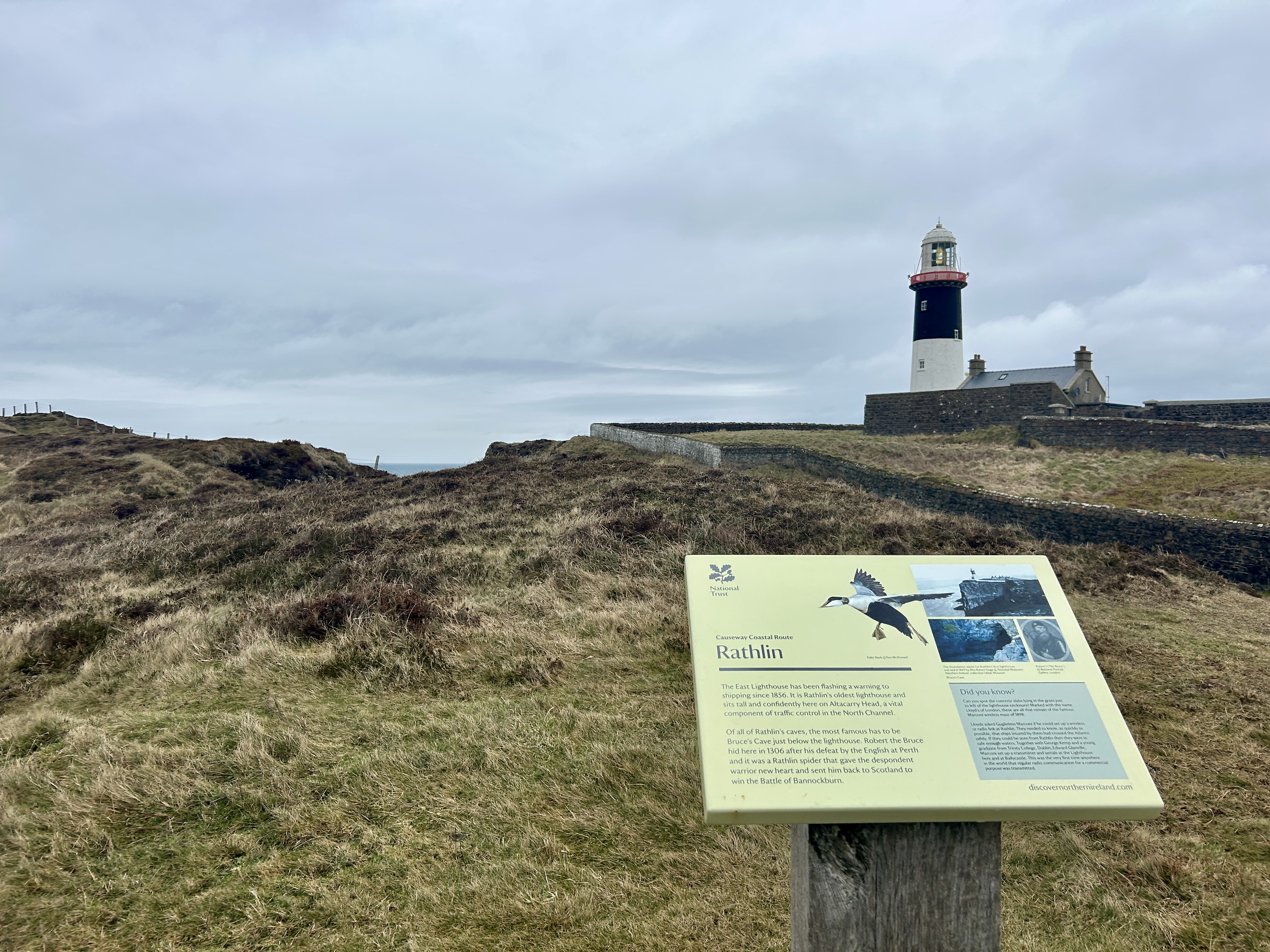
The next day, Jessica and her young son treated us to a tour of Rathlin Island. We learned more about the island’s history, its challenges, and its hopes for the future. We also visited the historic East Light site, which will be regenerated into an academic, research, and creative destination, as well as a community and technological hub, one of the core strands of FI‑I Phase 2.


We also learned about Rathlin’s groundbreaking LIFE RAFT (Rathlin Acting for Tomorrow) project, which has successfully removed invasive predators such as ferrets and rats to protect over 250,000 seabirds in Northern Ireland’s largest seabird colony. You can read more about this project’s success here.
After our tour, we boarded the ferry and made our way back to the mainland. We were very grateful for another generous lift, this time from Clare Mulholland, architect, senior lecturer at Queen’s University Belfast, and Co‑Director of Future Island‑Island, who brought us back to Belfast.

Overall, our experience with the FI‑I team and the Rathlin community was exceptional. Emma and I felt genuinely cared for… it is very clear to us that hospitality and generosity are core values shared by everyone we met. We arrived back home in Scotland brimming with new ideas and fresh inspiration for our work at Cove Park, with NAARCA, and within our own communities.
Stay tuned for more updates regarding NAARCA’s collaboration with Future Island-Island!